Most people who struggle at the table do not need special food, and they do not need a nurse. They need the plate to stay still, the cutlery to stay in the hand, and the glass to be within reach. Those are three separate problems and each has a cheap answer.
Watch one meal before you buy anything
Sit opposite the person and eat your own meal. Do not help. Within ten minutes you will see which of four things goes wrong: the plate moves, the food escapes over the rim, the hand cannot close around the handle, or the cup has to be lifted with both hands and still spills. Buy for the thing you actually saw.
First: stop the plate moving
A non-slip mat under the plate is the cheapest useful object in the room. It costs less than a coffee and it removes the need to hold the plate down with the other hand — which is exactly what someone with one working arm cannot do. A damp cloth does the same job in an emergency.
Second: keep the food on the plate
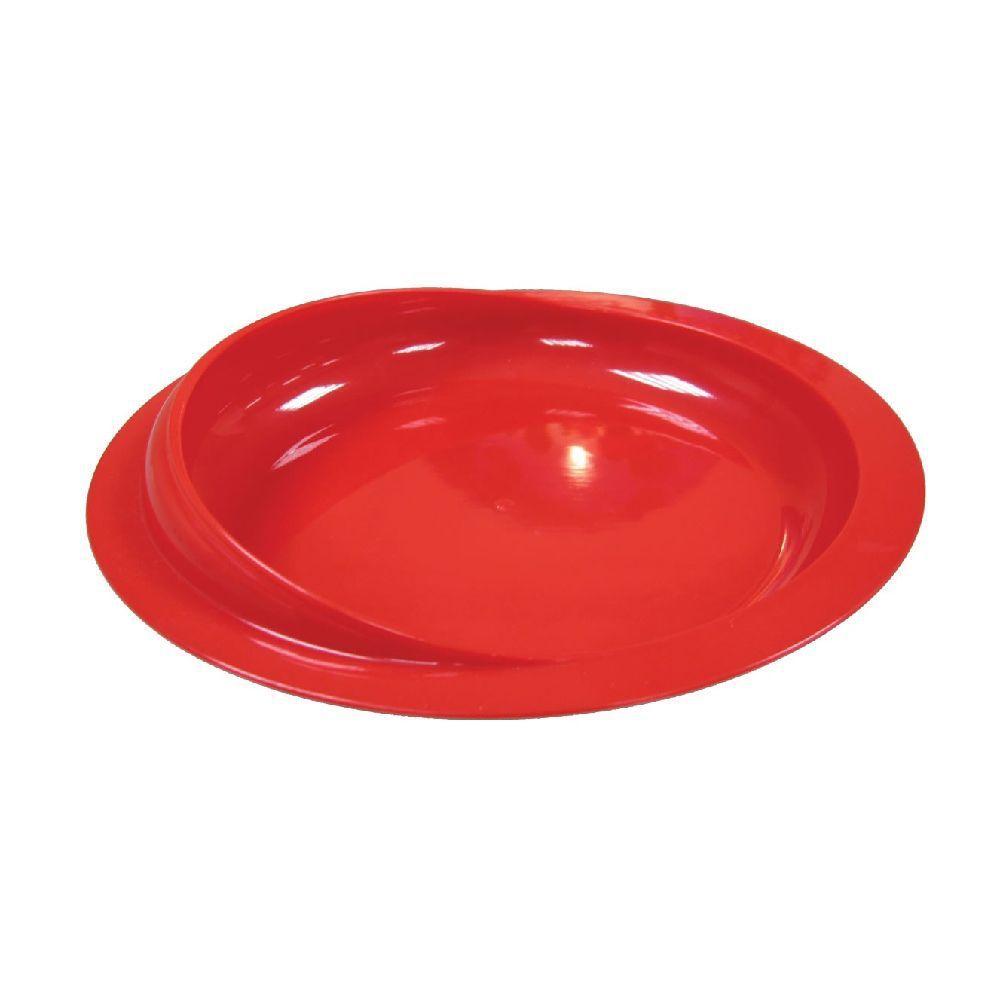
A plate guard, or a plate with a raised inner rim, gives the fork something to push against. This matters more than the cutlery. Without an edge, food is chased across the plate and half of it ends up on the table, which is tiring and embarrassing in front of other people.
Third: make the handle fit the hand
Built-up handles work when the problem is grip. If the fingers cannot close, a wider handle is easier than a thin one; if the hand is weak but closes normally, a lightweight handle matters more than a thick one. Weighted cutlery helps some people with tremor and makes others tired within five minutes — try one spoon before buying a set.
Cups are where most spills happen
A mug with two handles can be lifted with one hand and steered with the other, and it stays stable when put down. A cup with a cut-out rim lets someone drink without tilting the head back. Both are more useful than a lid, which helps with carrying but not with drinking.
Change the table, not only the tools
- Put the plate on a mat, directly in front of the person, not off to the side.
- Raise the plate slightly if the person has to bend forward to reach it.
- Serve smaller portions: a full plate is discouraging and harder to manage.
- Cut food before it reaches the table, in the kitchen, without comment.
- Keep the glass on the side of the working hand.
What we would skip
Battery-powered “self-feeding” arms, which are expensive and rarely tolerated. Plate warmers. Anything advertised as spill-proof, because nothing is. And full cutlery sets bought before you know which single item is the problem — one good spoon used every day beats eight pieces in a drawer.
When to ask for more than a product
If someone is losing weight, coughing at meals, or taking more than forty minutes to finish a small plate, the issue may be swallowing rather than equipment. That needs a speech and language therapist, not a new fork. Ask the GP for a referral; it is a normal request and it is quicker than waiting for a crisis.
Our kitchen and dining aids are grouped by the problem rather than by the diagnosis, so you can start with the one thing that went wrong at the meal you watched.